GENERATIVE AI
Generative AI is about structured workflows that combine data, prompts, and systems for reliable outputs.

GENERATIVE AI
Generative AI success is not defined by tools or models—it is defined by how well workflows are architected to deliver consistent, scalable outcomes.
Generative AI has evolved from experimental innovation into a core driver of digital transformation. From content generation and automation to intelligent decision support, organizations are rapidly adopting these capabilities.
Yet many implementations fail to deliver real business value—not because of weak models, but because of poor workflow design and lack of system-level thinking.
Automation is not about tools—it is about architecture.
Early AI adoption focuses on tools—chatbots, generators, or isolated automation. These demonstrate potential but rarely scale because they are not connected into a cohesive system.
Real impact comes from designing systems where data, models, and processes interact seamlessly to deliver measurable outcomes.
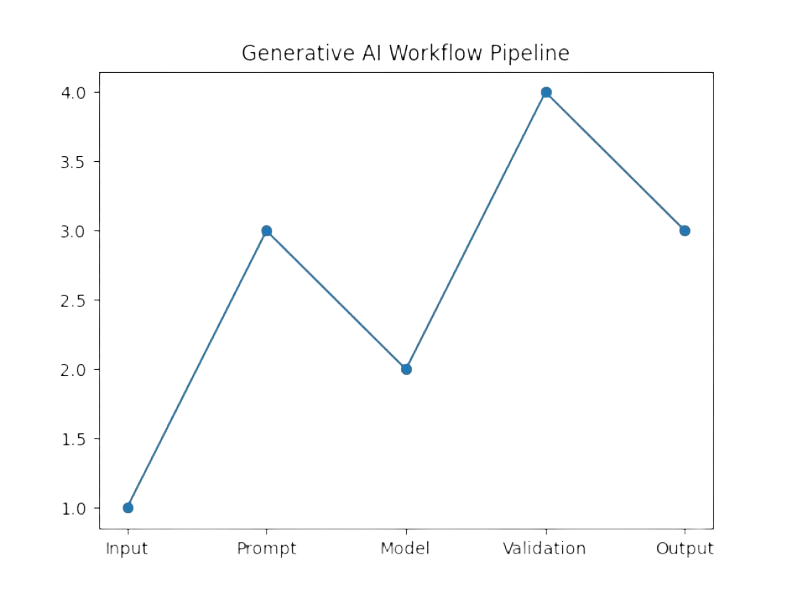
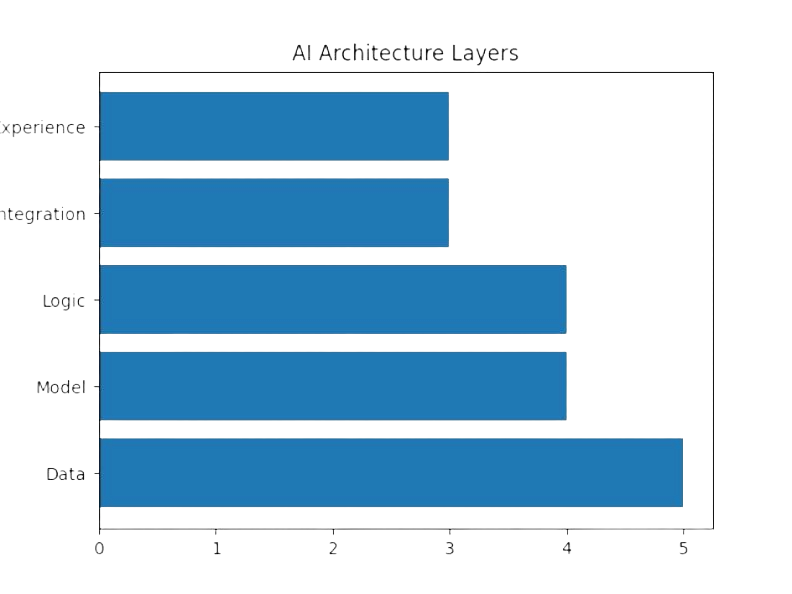
A generative AI workflow is a structured pipeline that integrates data inputs, AI models, decision logic, and outputs into a seamless system.
Each stage plays a critical role in ensuring reliability and performance.
These workflows include data ingestion, prompt engineering, output validation, system integration, and continuous feedback loops for improvement.
Without structured workflows, even advanced models produce inconsistent and unreliable results.
Scalable systems handle growing demand without performance loss. Reliable architectures ensure consistent outputs in production environments. Modular design enables flexibility and continuous evolution of AI systems. Security and compliance ensure safe and responsible AI deployment.
Automation enhances humans—it does not replace them.
Generative AI systems are probabilistic and can produce unexpected or incorrect outputs without proper safeguards.
Reliable workflows require validation rules, filtering mechanisms, confidence scoring, and fallback strategies to prevent failures.
Guardrails ensure AI systems remain safe, accurate, and production-ready.
Without integration, AI remains isolated and cannot deliver real business value.
Successful AI systems are deeply integrated into business processes—not built as standalone tools.
Integration enables automation, speed, and measurable outcomes.
Systems thinking is essential for real impact.
Systems must scale without compromising performance or reliability.
AI workflows evolve through monitoring, feedback loops, and continuous updates to prompts, models, and data.
Over-reliance on tools, unclear objectives, poor data quality, weak governance, and lack of scalability limit success.
Generative AI is not just a tool—it is a system.
Designing workflows that work requires strong architecture, integration, and continuous optimization to deliver real business value.
Automation is not about tools—it is about how systems are designed, connected, and optimized to create measurable impact.